What actually happens when someone searches “near me”
You’ve probably done it yourself this week. Stood in a car park, thumbed “coffee near me” into your phone, and picked one of the first places that came up without a second thought. Nearly everyone does it but what really happens when someone searches “near me”?? Well that quick little search is one of the biggest ways local businesses get found now, so it’s worth understanding what’s going on behind it.
Here’s the odd bit. You don’t even have to type a town name anymore. Someone in Grantham can just search “electrician near me” and Google works out roughly where they are from their phone, then shows them the closest, best-rated options. The person searching does almost no work. Google does it for them. Which means the businesses that show up aren’t necessarily the biggest or the cheapest. They’re the ones Google trusts enough to put in front of a ready-to-buy customer.
Why “near me” changed everything for small businesses
For a long time, getting found online felt like a game only big companies could win. They had the budgets, the fancy websites, the marketing teams. But “near me” searches quietly levelled a lot of that out. When someone in Bottesford wants a plumber right now, a national chain fifty miles away is no use to them. The local trade round the corner is exactly what they’re after.
So proximity matters. A lot. If you’re based in Newark and someone nearby searches, you’ve got a natural head start over a business two towns over, simply because you’re closer. That’s a genuine advantage smaller local businesses have, and plenty of them don’t realise they’re sitting on it. Around 46% of all Google searches have local intent, which is to say nearly half of everything people look for has a “where near me” hiding inside it. That’s not a small corner of the internet. That’s the main road.
But proximity on its own isn’t enough. Google isn’t just measuring distance. It’s asking whether you look like a real, active, well-regarded business. And that second part is where a lot of good local businesses lose out.
What decides who shows up
Three things, roughly, and none of them are complicated.
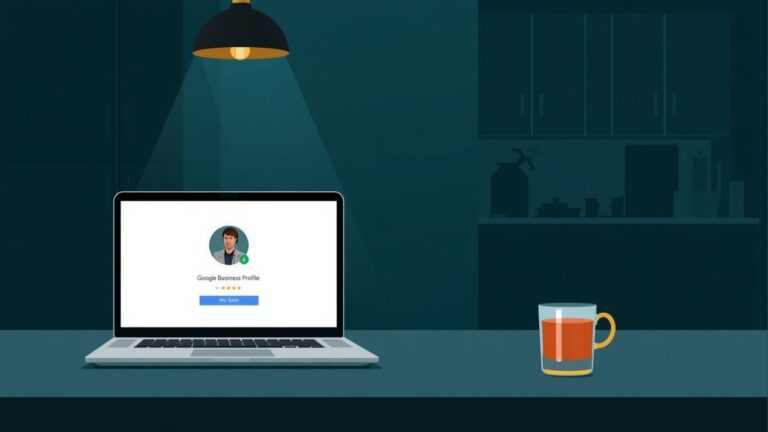
First, do you have a Google Business Profile, and is it filled in properly? This is the free listing that shows your name, hours, photos and reviews. No profile, or a half-finished one, and you’re often invisible for “near me” searches no matter how good you are. It’s the single biggest lever, and it costs nothing.
Second, do your details match up everywhere? Your name, address and phone number need to say the same thing on your website, your profile, your Facebook page, all of it. When they don’t line up, Google gets unsure it’s really you, and an unsure Google shows you less. I’ve seen a business in Orston miss out for months over nothing more than an old phone number lingering on one directory.
Third, do people rate you? Reviews are a huge signal. A business with thirty recent, decent reviews will usually beat one with three from years ago, even if the second one does better work. Fair or not, that’s how it plays out, because Google reads reviews as proof that real people use you and come away happy.
The “near me” bit is fading, actually
Small thing worth knowing. People are starting to drop the words “near me” entirely, because Google already assumes it. “Best roast dinner” or “emergency locksmith” now gets treated as local automatically, wherever you happen to be standing. So this isn’t really about the phrase “near me” at all. It’s about being the local business Google is confident enough to recommend when someone nearby needs what you do.
And that’s the shift. It used to be about ranking for the right words. Now it’s more about being genuinely findable and trustworthy in your actual area, whether that’s Radcliffe on Trent, Cropwell Bishop, Newark, Grantham or anywhere across the Vale of Belvoir.
What I’d do first
If you want to show up more for these searches, don’t overthink it. Claim and complete your Google Business Profile if you haven’t. Check your name, address and phone number are identical everywhere they appear online. And make asking happy customers for a review a normal part of how you work, rather than something you do once and forget.
None of that needs a big budget or a marketing degree. It needs an hour or two and knowing where to look, which is honestly most of the battle.
A few questions people ask me about this
Do I need to put “near me” on my website?
No, and please don’t try to!! Stuffing “plumber near me” all over your pages reads badly to people and doesn’t fool Google either. What actually helps is naming the real places you serve, like Bingham, Bottesford or the wider Vale of Belvoir, and having a complete Google Business Profile. Google handles the “near me” part on its end.
Why isn’t my business showing up when I search “near me” myself?
Two common reasons. Either your Google Business Profile is missing or half-finished, or Google isn’t yet confident about where you’re based and who you are, often because your details don’t match across the web. Worth knowing too, your own phone gives you skewed results because Google knows it’s you searching. Ask a friend a town or two over to try it for a fairer picture.
Does my exact address matter, or just my town?
It matters more than people think. Google uses your real location to work out who’s genuinely nearby, so a correct, consistent address on your profile is doing quiet work behind every “near me” search. If you’re a mobile business with no shopfront, you can set a service area instead, listing the towns you cover.
I’ve got no reviews yet. Am I invisible?
Not invisible, but you’re starting on the back foot. Reviews are one of the signals Google leans on to decide who to trust, so a business with a steady trickle of recent ones usually edges ahead. The fix is simple and free: start asking happy customers, one at a time, as part of normal work. It builds up faster than you’d expect.
Is this the same as paying for Google Ads?
No. Everything here is about the free, organic side of Google, your Business Profile and the map results. Ads are a separate thing you pay for per click. Plenty of local businesses in Newark, Grantham and around get found perfectly well without ever spending on ads, just by getting the free basics right first.
If you’re not sure how your business currently shows up when someone nearby goes looking, that’s exactly what my free visibility check is for. I’ll search the way a real customer would, from around Whatton and the wider area, and send you a plain one-page report on what’s working and what I’d fix first. No pressure to buy anything after.
Becky Halls. Websites, Google profiles and AI visibility for local businesses across Nottinghamshire. beckyhalls.com